Friday, August 31, 2007

Sustainable Sustainability


Bob Dolobois
Executive Director
American Nursery &
Landscape Association (ANLA)

There’s a lot buzz associated with the concept of sustainability. The term is applied haphazardly as a marketing tool, a standard of manufacturing, even a consumer mindset. As the creator and sustainer of managed landscapes, this term—at least for now—is unavoidably linked to us, and it’s important for the nursery and landscape industry to take a close look at what sustainability is (and is not) when applied to our businesses. Enter: the American Nursery & Landscape Association (ANLA).

ANLA has officially adopted sustainability in our industry as one of its five major strategic objectives. It is the association’s intention to assist our member businesses and the surrounding industry in defining what constitutes sustainability for us and how this old-fashioned, but suddenly contemporary concept, affects what and how we do business.

(True confession; this blog is a teaser to encourage its readers to attend a more extensive presentation on this subject at the upcoming FNATS Show.)

Let’s start with a generic definition of sustainability: Sustainability is the ability to continue a defined behavior indefinitely. If we were living in an era prior to the industrial revolution, the notion of sustainability in agriculture or manufacturing (such it was) would be considered as obvious as breathing—something that’s done without even thinking about it. The industrial revolution, as its names implies, was significant and shifted our thinking from learning how to harness nature, to learning how to conquer it. It’s the conquering part that can cause problems.

For example, modern chemistry creates compounds that do not occur naturally and we now co-mingle those compounds in the natural environment. Some of these activities can fit the definition of sustainability. Other such activities result in substances that injure the natural environment over time and cannot be continued indefinitely (see definition above) without causing irreparable damage or loss.

Many industry practices fit into the definition of sustainable; some of our practices do not. As the marketplace and the regulators of that marketplace focus more on the “don’ts,” we need to identify and tell the positive story about the ones that do. If this is a topic of interest to you, please attend the FNATS presentation...and bring your opinions and ideas to this lively session.

Thursday, August 09, 2007

Just Say NO! It will set you free

Harold Jenkins, FCLC
Jenkins Landscape Co.
Hobe Sound, Florida

I’ve heard so many fellow landscape contractors complain about the unreasonable demands that are in some General Contractors and or Architects contracts. How about “Just Say NO!” I’ve heard everything from cleaning up trash on the site for a year after completion to the guarantee of winter annuals through the summer.

Let me get this straight. You want me to install this landscape job per your specifications. But, looking over your previous jobs it seems you have accepted substandard work and material. I’m being forced to work with an irrigation sub contractor who is a “low bidder special” not under my control. You have Billy Bob’s lawn service to do the maintenance and pest control. You want me to warrantee the plant material for 2 years, re-mulch when necessary, and replace any material that may be damaged by others and clean up any trash that accumulates on this commercial parking lot job? And I must bid with little or no built-in profit while having to include all these extra demands at no extra charge. ARE YOU NUTS?

If you want to be treated like the professional you are, maybe acting like one would be a good start. Doctors or lawyers are professionals. Would you expect them to make unreasonable concessions to keep you as a client? I DON’T THINK SO. So, why do we tolerate this type of treatment?

Here’s my definition of a professional landscape contracting firm: a properly insured company with competent, uniformed and Certified employees. Clean, well maintained, modern equipment. A contractor who goes above any client’s expectation. A contractor who deals with only the best subcontractors, suppliers, general contractors, architects and clients. This contractor also has a great reputation and, as a result, is able to pick and choose every job. This contractor also expects to be paid a reasonable fee (including some profit) for the services rendered. This is attainable by anyone who wishes to be a landscape professional.

My point to all this is that we all waste so much time and effort with clients who are duds, and, as a result, make little or no profit. If we were to measure who gives us the most stress in our lives, it would be those same people. Our time can be better spent servicing clients who appreciate our work and, most of all, can afford to pay the bill at the end of the job. How about letting all the substandard, non-professional, fly-by-night guys out there take all of those difficult clients? Let them get bogged down in low-profit, frustrating work while you’re working on rewarding projects. If every Landscape Professional did so, the only landscape installers available to these bad clients would be the bottom feeding non-professionals of the world. Who knows, maybe they would have to change their ways. (It sure sounds good on paper).

As landscape professionals, we have to separate ourselves from the non-professionals with whom we think we are forced to compete. The very first step is not to swim in their pool. Act like the professionals you are. Do not sign a contract that has unfair and unreasonable demands. Insist they sign your contract or, at least, attach it as an addendum. Check out the client’s financial situation and their past records with our landscape contractor brethren. Increase your professional portfolio by getting as many professional certifications as you can. Hire only the best employees and pay them fairly. Appearance is everything: nice, clean trucks, equipment and uniformed employees will go a long way. A good appearance is one of the few true forms of advertisement that produces results.

Most of all, JUST SAY NO! It will set you free to focus on rewarding work rather than frustrating yourself with non-professionals. It feels good too. Your accountant may not agree completely, but your cardiologist and psychologist will. And, who’s more important? Lastly, enjoy your work. Don’t let anyone take that away.

Monday, July 16, 2007

So what are you passionate about?

Hannah Carter
Director of Wedgworth Leadership Institute
Gainesville, Florida

“Follow your passion, and success will follow you.” ~Arthur Buddhold

So what are you passionate about? Now before you respond with the first thing that comes to mind (my spouse, golf, fishing, shopping, etc.) let’s settle on a definition of passion. Merriam Webster defines passion as “an intense, driving, or overmastering feeling or conviction.” With this definition in mind, let me ask you this question again, what are you passionate about? Are you passionate about your organization or working within your industry?

If that question posed the second time made you pause, think, and wonder “if I like my job does that count?” Or, “I ’m a member of my industry association, does that make me passionate?” No, no it doesn’t.

In the book Good to Great, the author, Jim Collins tells us that we will never be a part of a world class organization (or have a world class life) if we are satisfied in doing the things that we are competent in, being “competent” isn’t the basis for greatness. When Collins poses a question on passion, he asks, “You are doing work you are passionate about and absolutely love to do, enjoying the actual process for its own sake? (“I look forward to getting up and throwing myself into my daily work, and I really believe in what I'm doing.”) As E.M. Forster stated “One person with passion is better than forty people merely interested." So do you have passion about your organization or your industry, or are you merely interested in it?

If you’re merely interested, then are you in the right business, or industry for that matter? Mere interest isn’t going to make you or your organization a success. Mere interest isn’t going to keep your industry going. And mere interest isn’t going to provide the leadership necessary to navigate the issues and challenges that face you and all members of your organization.

While there are many individuals in your organization and industries that are “competent” and “interested” , I challenge you to look beyond this standard to focus on what you are passionate about within your organization and your industry. The wonderful thing about passion is that it is inspiring to those around you…your co-workers, your customers, and others within your industry. While there are countless recipes which dictate the necessary components of leadership, I contend that passion is absolutely essential, without it, we are just mediocre at best.

“I can't imagine a person becoming a success who doesn't give this game of life everything he's got." — Walter Cronkite

So are you giving your organization and your industry everything you’ve got?

Friday, June 08, 2007

Letting people know who we really are

Jim Martin, ASLA, CLP
Professional Landcare Network

When I assumed office as PLANET’s president, through a deliberate strategic planning effort, PLANET had established a broad agenda of initiatives for our association and our industry. Yes, I would like to see a majority of them advanced during the next 12 months. If time is too short to realize progress in all areas, I would be happy to settle for major progress with just one of these initiatives, the repositioning of the green industry. I want members of the green industry to start taking credit for what we all do, for “creating and maintaining the quality of life in communities across America.”

In all walks of life, it’s easy to lose sight of the big picture. In this instance, I’m talking about the folks in our industry losing sight of the importance we play in our communities when we design, install, and maintain beautiful landscapes. I suggest that our industry is one of the top three or four industries responsible for creating and maintaining the quality of life in our communities. Once our industry and our customers make this connection, we become more than mere service providers, more than a group of non distinct constituents to legislators, more than a source for a summer job for students, and more than a place to go to work for employees. Once that connection is made, we become the environmental stewards of the built and natural landscape, and that becomes a powerful image that will enhance our bottom line, our representation in congress, our recruiting, and our effort to motivate employees.

I’m not suggesting that PLANET take credit for being the sole creator of our quality of life. We’re in this together with all members of the green industry, other industry groups, as well as our suppliers and educators. Knowing what we do is one thing; communicating it is another. We may never be as good at communicating what we do as we are at doing what we do. But I firmly believe that if we start now and get the message across that WE CREATE AND MAINTAIN THE QUALITY OF LIFE IN COMMUNITIES ACROSS AMERICA, people will one day have appropriate respect for the impact we make on their lives, and that’s good for everyone.


Monday, November 06, 2006

"Raising the bar on consumer expectations"

Dennis Higbie
Director of Horticulture and Pest Management
Walt Disney World
Orlando, FL

Walt Disney realized the significance of horticulture before he broke ground at Disneyland in California and from the very beginning placed great importance on the landscapes in his park. Providing a great environment for our guest is critical for the success of our parks, and we count on the businesses in the horticulture industry to provide the products and services to make that possible. A short list includes nurseries, irrigation companies, landscape contractors, landscape architects and fertilizer providers. Almost all of them are members in the FNGLA.

The Epcot International Flower & Garden Festival, which began in 1994, has taken our guest expectations to a new level. Never before was horticulture given a starring rather than supporting role in the show. For the first time, there were large numbers of guest who were asked to come to Walt Disney World to see the great horticulture show we were able to provide. From the beginning it was a great success. From the beginning the FNGLA was a part of the show. A majority of the plant material at the Festival comes from Florida nurseries, and many of the participants in the Epcot International Flower & Garden Festival are based in Florida. Since a high percentage of the guests visiting the Festival live in Florida, the industry helps to make our show relevant by presenting our guests with plants and products they can use at their homes.

Obviously, not all of the guests who come to Epcot during the 60 days of the Festival are drawn by the Epcot International Flower & Garden Festival. Many of them, especially those from out of the area, get lucky and have the show going on during their vacation. However, there are a great many guests who do come just for the Festival, and their goal is to see a great horticulture show, enjoy the park, and take home knowledge they can use to improve their personal landscapes. Their interest level is large and spans the various aspects of the industry. A great many of them are relatively new to the area, and they have discovered the unique challenges Florida presents to gardeners and are looking for solutions to their problems. From bedding plants to containers, hanging baskets to irrigation, these guests want to learn it all. An area of increased interest in the past few years is environmentally sensitive gardening, particularly techniques which help conserve water.

Over the past 13 years our guests have become much more educated and savvy about gardening. What impressed 10 years ago would hardly raise and eyebrow today, and that is a real testament to the horticulture expectations of our guests, and the public as a whole. While it is true that the Epcot International Flower & Garden Festival has helped raise our guest expectations, the industry as a whole has made tremendous strides in this area. The result of creating more educated and demanding guests is that our quest for higher quality and more spectacular shows never stops and this trend can also be seen industry wide. However, one thing that we learned long ago is that our guests keep returning if they are given a great show, and your customers will return if they are given high quality services and products. As long as everyone in the landscape industry keeps this fact in mind, the customer base will continue to grow.

Finally, if you have never visited the Epcot International Flower & Garden Festival, 2007 will be a great time to come. The show runs April 5-June 3 and our goal once again will be to exceed our guest’s expectations. And make sure you stop by the Growing Future Gardeners garden which is presented by our friends at the FNGLA and is designed to ensure a future generation of great gardeners.

Thursday, September 21, 2006

"We’ve come a long way, baby …"

Judy Drake
Sunscapes Landscape Designs
Jacksonville, Florida

It wasn’t too many years ago that it was illegal for a landscape designer to sell a landscape plan. Through the efforts of a number of designers, then Florida Rep. Jim Fuller of Jacksonville introduced legislation to change the law. The (then) FNGA, as well as the Florida Builders Association, supported our cause and we were successful.

Many designers take these hard earned efforts for granted, but I believe we have an obligation to work with and reach out to landscape architects. As the trade association representing Florida’s vast nursery and landscape industry, FNGLA is our bridge for doing exactly that.

I also believe we have an obligation to “be the best that we can be” in response to the privilege we have been given. I’d like to suggest three ways we can do that.

Become certified. You will learn a great deal through the process of certification, and when you can declare yourself a “FNGLA Certified Landscape Designer,” you will place yourself above the crowd.

Learn, learn, learn. FNGLA offers wonderful educational opportunities through the Short Courses at FNATS and TPIE. These courses, which include low voltage lighting applications to new plants in the landscape, are all taught by nationally known individuals. They all give wonderful opportunities to expand your mind and your resources.

Take advantage of the Landscape Design Tour. The Landscape Division of FNGLA sponsors a Landscape Design Tour each spring. It provides an opportunity to see some of the best gardens in the state while networking with other designers. This tour will challenge and stimulate you to create better designs.

So, get off your duff! It’s not too late to register for the FNATS Short Course. All of these opportunities will really pay off – not only in your skills, but also in your bank account. See you at FNATS in Orlando!

Friday, September 01, 2006

"Tires ain't pretty"


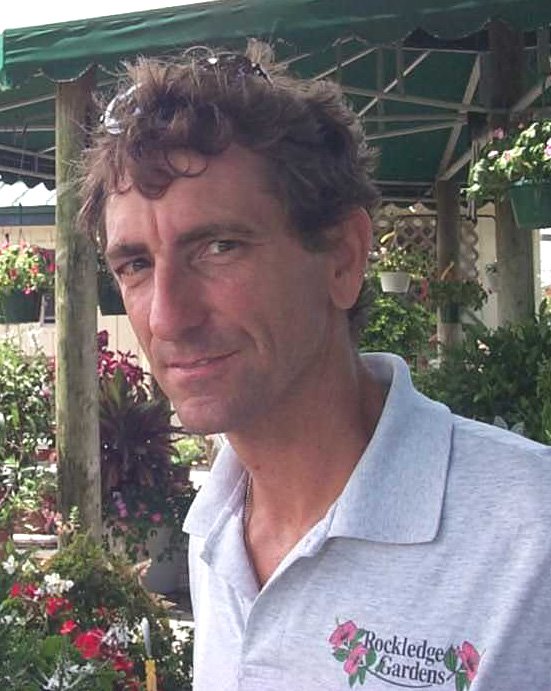
Kevin Reily
Rockledge Gardens, Inc.
Rockledge, Florida

Each day when I wake up I thank God that I'm not going to work to sell tires. "Tires ain't pretty" and plants are beautiful. I have been involved in our business, a retail garden center, for 32 years and with my wife Theresa even longer. Yes, there are days when I seem to take 2 steps forward and 3 steps backwards, but I can't think of any other industry in which I would rather be involved.

Yesterday's garden center could have been operated on auto-pilot. Today's garden center definitely needs constant molding and nurturing. Because we have been in business for a zillion years does not guarantee anything. Operating an independent garden center in Florida is more challenging than ever. This includes keeping the consumers interested in our products and services. We must raise the bar. Buying tires might be a necessary evil. Some would argue that buying plants is not necessary. We as an industry, garden centers - growers - landscapers - designers and allied, must work together communicating the message “Gardening Is Fun!”- “Gardening is not a four letter word!” – “Gardening enhances the quality of life!”

Theresa and I have found great resources in networking with other garden center operators as well as our vendors. We can bounce and borrow ideas, tweaking them to make them work for us. We learn what is coming down the pike as far as new products, new ideas and new regulations. We have done this by participating in the Garden Center Group, Garden Centers of America and FNGLA along with attending trade shows such as FNATS and TPIE.

So now at the end the day I am thanking God for the days we are able to take 3 steps forward and only 2 backwards.

Thursday, August 10, 2006

"No Whining Allowed"

Tomas Aiello
Aiello Landscape, Inc.
Hobe Sound, FL

I first joined FNGLA’s Landscape Contractors Steering Committee in 1984. I had just started working at Rood Landscape, having moved to Florida from the Baltimore, Maryland area. I was so excited to get involved with (then) FNGA and attend my first Landscape Contractors Division meeting with industry colleagues and meet all these great Contracting Giants who were among this group. I couldn’t wait! What would we discuss? Landscape Awards, Landscape Architect-Contractors Round Tables, Estimating Seminars, Etc..

Well, yes these topics were all on the agenda, but what I didn’t know was that the ‘Giants’ of the industry would basically sit around and whine about, Customers, Contractors, Getting Paid, Being Sued, etc. You name it, they whined about it.

Two weeks ago at FNGLA’s first Practical Field Exam for FCLT (FNGLA Certified Landscape Technician), there were many Contracting Giants there, and some - some, not all – were still whining about Customers, Contractors, Getting Paid, Being Sued, etc.

Gee, not much has changed in 22 years.

What is the problem here? I’ll tell you what the problem is. We, contractors, - some not all, - have become spoiled, fat, soft, unappreciative WHINERS. We live in the SUNSHINE STATE for Pete’s sake. It’s sunny and beautiful almost everyday. No snow, no freezing, not too much rain. Okay, sometimes we get a little wind over 120 mph. It blows in, it blows out, two hours tops, and the sun is shining again. Some of us work on the coast so we get to see the ocean or gulf everyday. Things could be worse.

Remember too, that IMAGE IS EVERYTHING. Project yourself as a Professional, act Professional and deal with other Professionals. We deserve it. Project yourself as a bum, act like a bum, deal with bums, and be paid like a bum. If you buy cheap, old broken trucks, then you will probably attract cheap, old, broken down clients. Buy new trucks, put your employees in uniforms and look like a Professional to be paid like a Professional. Determine the best size for your company, then go ahead and do the best possible job you can do.

There is plenty of work in our state right now. Big, small, commercial, residential, new or renovations – it’s all out there. We all have plenty to do. Don’t be hung up with growth of 5%, 10%, or 20% every year. Focus on profits of 5%, 10%, or 20% every year. Breaking even is for people who have nothing better to do. None of us need more practice. I know I don’t. Pass on a job every now and then. Check out your potential clients; they check us out. Call other subs for references and information. What’s their pay schedule? Do they pay on time? Do they pay twice a month? Do they hold retainage? (Who invented this word? Not a landscape contractor.)
You’re working hard. You deserve to be paid.

Ask for deposits. No, better yet, require deposits. Mark up your subs. Why manage their work for free, you’re the one doing the coordinating. Anyone can be low bidder. How many can be middle or high bidder and still get the bid based on reputation? I don’t know about you but I would rather do $1 million in sales and make 10% net, than work myself into the ground to do $10 million in sales and make 1% net, because I don’t need to be doing this just for the practice.

Find out who the best clients are in your area (i.e. Landscape Architects, General Contractors, Developers) and go after their work. You’ll feel more appreciated. Separate yourself from everyone else. Work hard to establish yourself as the best Landscape Contractor and not the cheapest. We work in a great place and get hired to create lush, tropical paradises. Celebrate the opportunities by creating not only beauty but value for your clients, and they’ll be glad to pay accordingly.

Or just keep being low bidder, buying old trucks, installing cheap plants, buying cheap beer, and chasing down your money. But for Pete’s sake, STOP WHINING!

Now excuse me, while I drive to the beach in my new BMW (yes, the top is down) to drink down a few cold Corona’s. It’s Friday. I just made a deposit at the bank.

Friday, July 14, 2006

"September 28th can’t come soon enough"


Robert E. Bowden
Director
Harry P. Leu Gardens
www.LeuGardens.org

One of the great things about living in Florida is the astonishing diversity of plants that we as plant enthusiasts have to work with. From the rolling hills of the Florida Panhandle to the sugar sand beaches of the Florida Keys, the assortment of plants for use in residential gardens and commercial landscapes is virtually limitless. Incredible leaf and stem textures, forms that boggle the imagination and flowers in every shade of the rainbow make for a wonderful plant palette with which to create outdoor living spaces.

Gardening, whether it’s in a small residential back yard or in a large corporate campus, should be enjoyable work. For those of us living in Florida, however, we know that it can also be very difficult and demanding even in the best of locales. And behind all of the mysterious textures and exotic colors are the thousands of people that produce the plants that we work with. For that reason, I guess that’s why I enjoy FNATS every September.

We work with plants everyday and I can share my experiences with a person in a FNATS booth and they know what I am talking about. Forget the hearsay and the rumors about the qualities of a particular selection -- the person in the booth has the hands-on, no-nonsense experience that we need out in the field. Often ten minutes with a grower can give you all information you need and might have taken several hours of research on the internet.

As a manager of a public garden, I know our guests expect to see the best plants for Florida when they visit. They want to see them growing in combinations that can be re-created in their gardens at home and they want to see the latest and the greatest plant introductions. They want to see environmentally sensitive plants too– plants that don’t require pesticides and/or lots of water. Perhaps because we have so many we sometimes don’t think about it much, but Florida really is the storehouse for some of the finest growers of plants in the world. Without my traveling around the world looking for new plants, growers throughout Florida bring them to our doorstep to see. That’s where FNATS really shines.

September 28th can’t come soon enough.